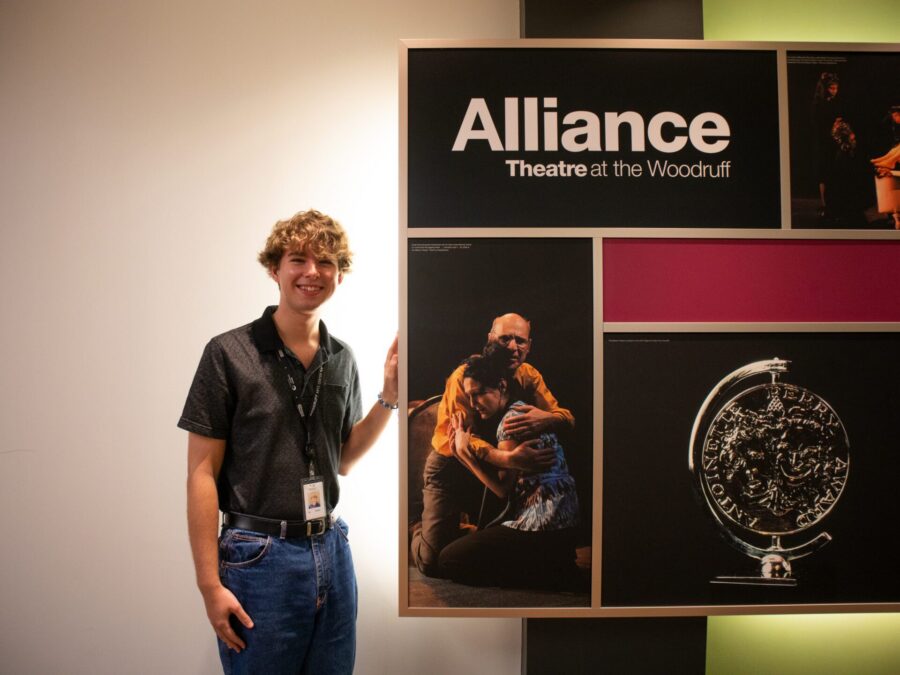
Inside an Alliance Theatre Internship: An Emory Student’s Journey in Producing, Dramaturgy, and administration.
My time working as the Literary and Engagement Intern at the Alliance Theatre through the Ethics and Servant Leadership Program has been nothing short of a transformative experience as a student of theater and lover of the arts.
Going into the summer, I knew that the Alliance was the premier regional theater in the Southeast, a Tony-honored institution that emphasizes impactful storytelling, engagement with the Atlanta community, and, as per their mission statement, “expanding hearts and minds, onstage and off.” What I did not anticipate, however, was how this philosophy permeates every aspect of the organization — not just the shows on stage, but the way every department, from literary to engagement to even financial, treats storytelling as a shared, collaborative act of service to Atlanta itself.
On my first day on campus, I was struck by the sheer immensity and grandeur of the Woodruff Arts Center. I grew up in a small town in West Georgia where the arts were never treated as a priority, where the theater (or “thee-ayter”, as I heard colloquially back home) meant a few cramped rooms in the local community center. Going on that tour of the Woodruff that first day, seeing huge rehearsal halls, a state-of-the-art costume shop, an entire production wing, was completely magical in the best way.
It was the first time the scale of what a career in this industry could actually look like became real to me.
My job duties as Literary and Engagement Intern oftentimes varied from week to week, but mostly consisted of two ongoing projects: reading new scripts and creating dramaturgical research packets for the Alliance’s upcoming fall shows. Before I had this internship, script-reading almost felt like a chore; I always preferred to see a show live rather than read it on the page. But through this experience, I soon realized that there is an art to script reading that is so much richer than I’d ever imagined.
Reading scripts on the page allowed me to sharpen my analytical eye and develop a much deeper, more nuanced sense of what constitutes effective storytelling for Atlanta audiences. As I began reading through the catalogue of scripts, I began to realize that the stories that are uplifted on Alliance’s stages not only have to be compelling, but a right fit for Atlanta communities and audiences.
Take Dictionary of the Vulgar Tongue by Alanna Coby, a Kendeda playwriting finalist I got to read early in the summer. This is a sharp, time-fracturing satire in which a group of affluent Connecticut women, gathered in the comfort of their own certainty about their ideology, are undone by the arrival of a young working-class mother with nowhere left to turn, revealing across time periods how class, gender, and power hide behind civility and charity.
It’s the kind of script that made me understand why the Alliance has built its reputation the way it has: not by chasing playwrights who are already famous, but by finding writers early and shepherding their talents draft by draft until their storytelling becomes something a regional audience can actually sit inside.
My other main duty, dramaturgical research, is the piece of this internship I’m proudest of, because it asked something completely different of me depending on the show. I produced two dramaturgy packets/presentations for the Alliance this summer: Purpose and Carmela Full of Wishes. Two phrases from Abrianna, my supervisor, stuck with me throughout both projects: that as dramaturgs, we should show humanity, not comment on it, and that borders don’t define humanity. These mantras caused me to think about this work differently from other types of research — it’s all about presenting information that is helpful for the actors, not crafting an argument for them.
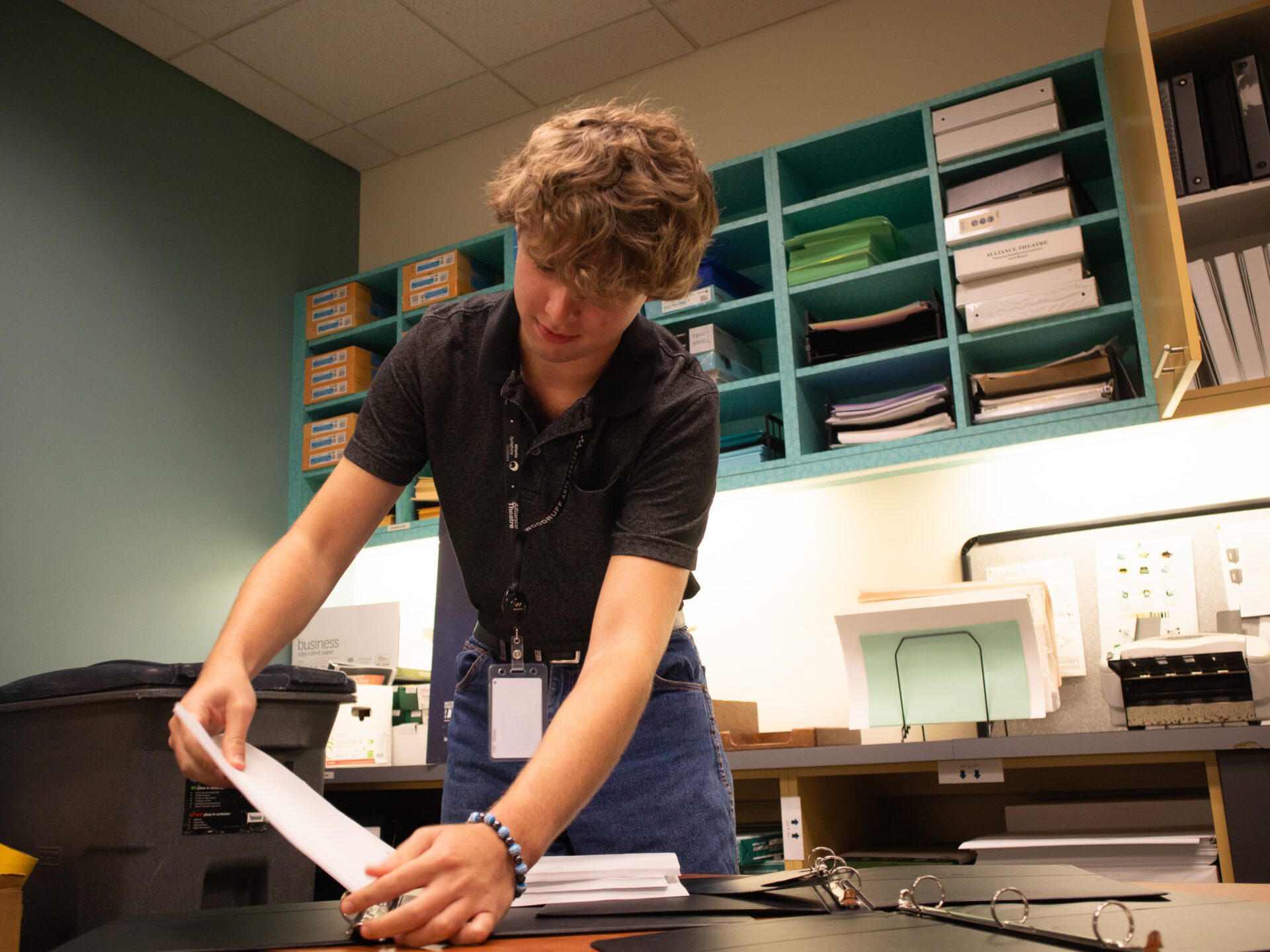
Outside of my roles in the literary department, I was invited to sit in on any departmental meeting or rehearsal I was interested in, and I took heavy advantage of this! I attended weekly Production and Creative Team (PACT) meetings, where I observed high-level season planning, budget management, and the cross-departmental logistics required to execute the Alliance’s productions.
As a member of the engagement team meetings, I helped set up the front lobby display for the recently premiered musical Basura, using actual instruments built out of recycled trash by the Paraguayan orchestra that inspired the musical.
My favorite experiences, however, had to be sitting in the rooms where the magic happens. This included watching auditions for A Christmas Carol, sitting in on rehearsals for the Palefsky Collision Project for Teens, and stepping up to help lead a week-long development workshop. It proved to me that the quiet administrative work of running a room — printing copies of scripts, transporting snacks, hunting for extension cords — is vital to a successful creative process.
None of these opportunities would have been possible if it weren’t for the incredibly warm, welcoming, and generous people across every floor at the Woodruff Arts Center. These are industry professionals who were so kind to welcome me into the fold — and I learned so much by talking to them. These conversations allowed me to build connections and learn firsthand the day-to-day realities of working theater professionals. I am deeply grateful to the entire Alliance Theatre staff for opening their doors, sharing their knowledge, and making me feel like a valued collaborator every step of the way.
As I look towards my final year at Emory, I am now carrying with me so many new skills, relationships, and a discovered interest in producing that will support the work I do in all of my productions. My experiences with engagement and marketing will inform how I manage social media and audience outreach for the Emory student theatre group Dooley’s Players. Developing a taste for what makes a good story through my script coverage work will make me a much sharper, more perceptive director when I stage a student production of Crimes of the Heart this December. As a performer, studying these professional Alliance actors as they remain completely grounded and present in audition and rehearsal rooms will shape how I approach my own role in Theater Emory’s fall production, This Girl Laughs, This Girl Cries, This Girl Does Nothing.
The Alliance Theatre is a truly special institution that shines a light on every human experience, and I am extremely thankful that the Ethics and Servant Leadership Program provided a space where I could cultivate real-world leadership skills that I can take on every step of my journey as an artist.

Come Curious. Leave Changed.
Join us for transformative theater that speaks to the heart of Atlanta.